

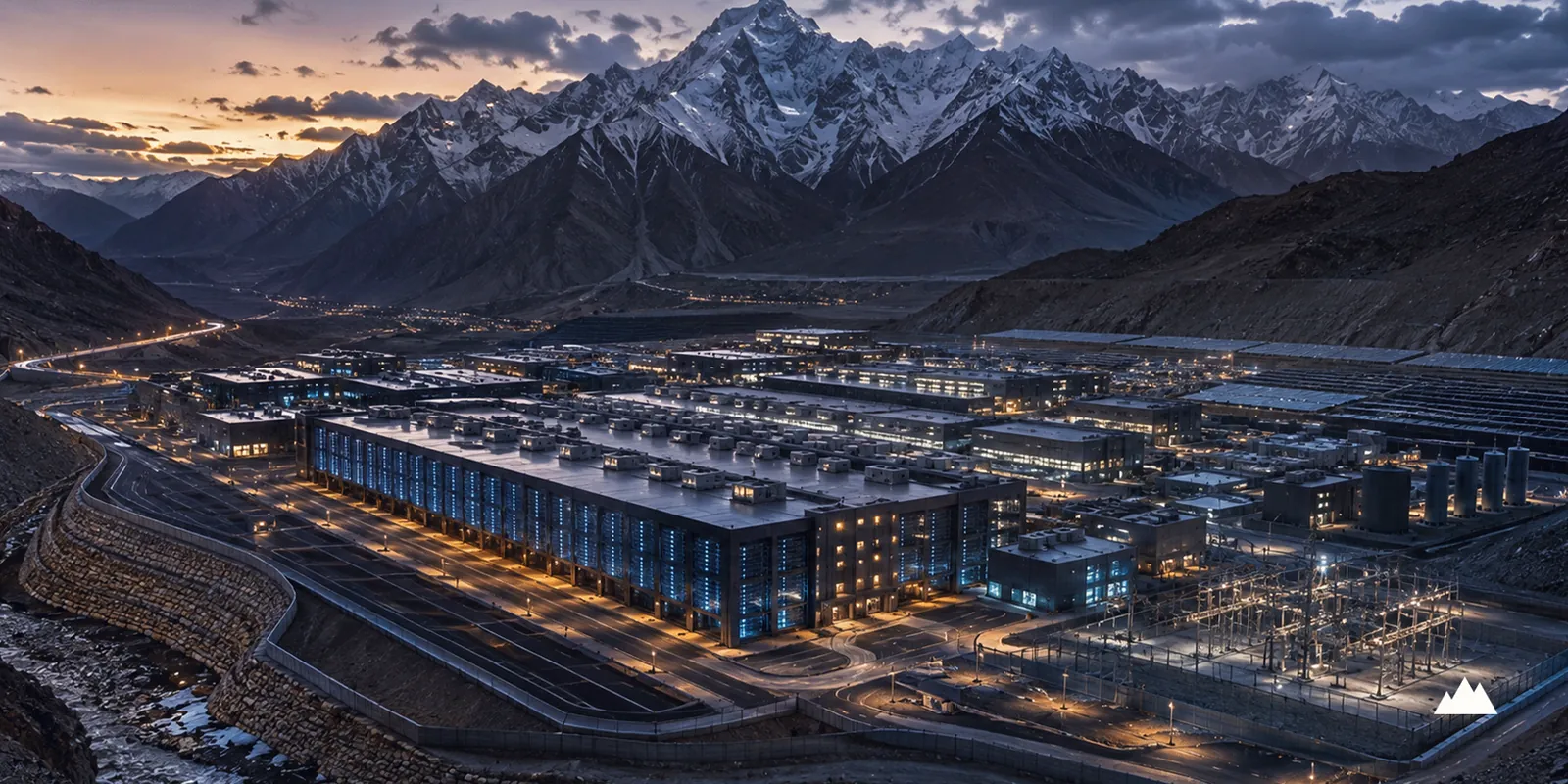
Technology and Power
India's AI infrastructure buildout is projected to need 40–50 TWh of new annual power by 2030 — a load the Himalayan region's untapped hydropower is positioned to help meet.
40–50 TWh
Projected new annual power demand from India's AI buildout by 2030
Source: Central Electricity Authority of India (2024); China Energy Portal (2024); IRENA, Hydropower Potential in South Asia (2023)HEF estimate 8 August 2026source links pendingvia tracker
150 GW
Untapped hydro potential, eastern Himalayas
Source: IRENA Hydropower Potential in South Asia (2023); Central Electricity Authority of India (2024); China Energy Portal (2024); EA Transmission Master Plan, Brahmaputra Basin (Oct 2025)Reported 8 August 2026source links pendingvia brief
76 GW
Targeted hydro-capacity evacuation by 2047
Source: IRENA Hydropower Potential in South Asia (2023); Central Electricity Authority of India (2024); China Energy Portal (2024); EA Transmission Master Plan, Brahmaputra Basin (Oct 2025)Reported 8 August 2026source links pendingvia brief
The Systemic Problem
Every large AI model trained and served at scale is, beneath the architecture, a power procurement problem. India's data-center and AI compute buildout is projected to require 40–50 TWh of new annual generation by 2030, and the eastern Himalayas alone hold an estimated 150 GW of untapped hydro potential that could supply firm, clean power for it — if the transmission and evacuation infrastructure is built out fast enough.
Why It Has Global Consequences
Whether that demand is met with firm clean power or with slower, higher-carbon alternatives has consequences for India's climate commitments, grid stability, and the pace at which AI infrastructure itself can scale. It also determines whether the Himalayan region captures the economic value of its own hydropower reserve or continues under-utilizing it.
Related Intelligence
Trackers
Related Projects
Indicators HEF Will Monitor
- AI- and data-center-driven power demand growth
- Progress toward the 76 GW hydro-capacity evacuation target by 2047
Intended Institutional Outcomes
- Firm, clean power matched to compute growth without diverting from other regional needs
- A transmission and evacuation buildout that keeps pace with disclosed capacity additions