

Essay · Mountain Economies
Six Things the Himalaya Can Learn from Alaska
Alaska turned oil royalties into a sovereign wealth fund, land claims into equity and fisheries into quotas. Six lessons for the Himalaya, and what each would reprice.
Joshua Singh Kanwar
7 min read
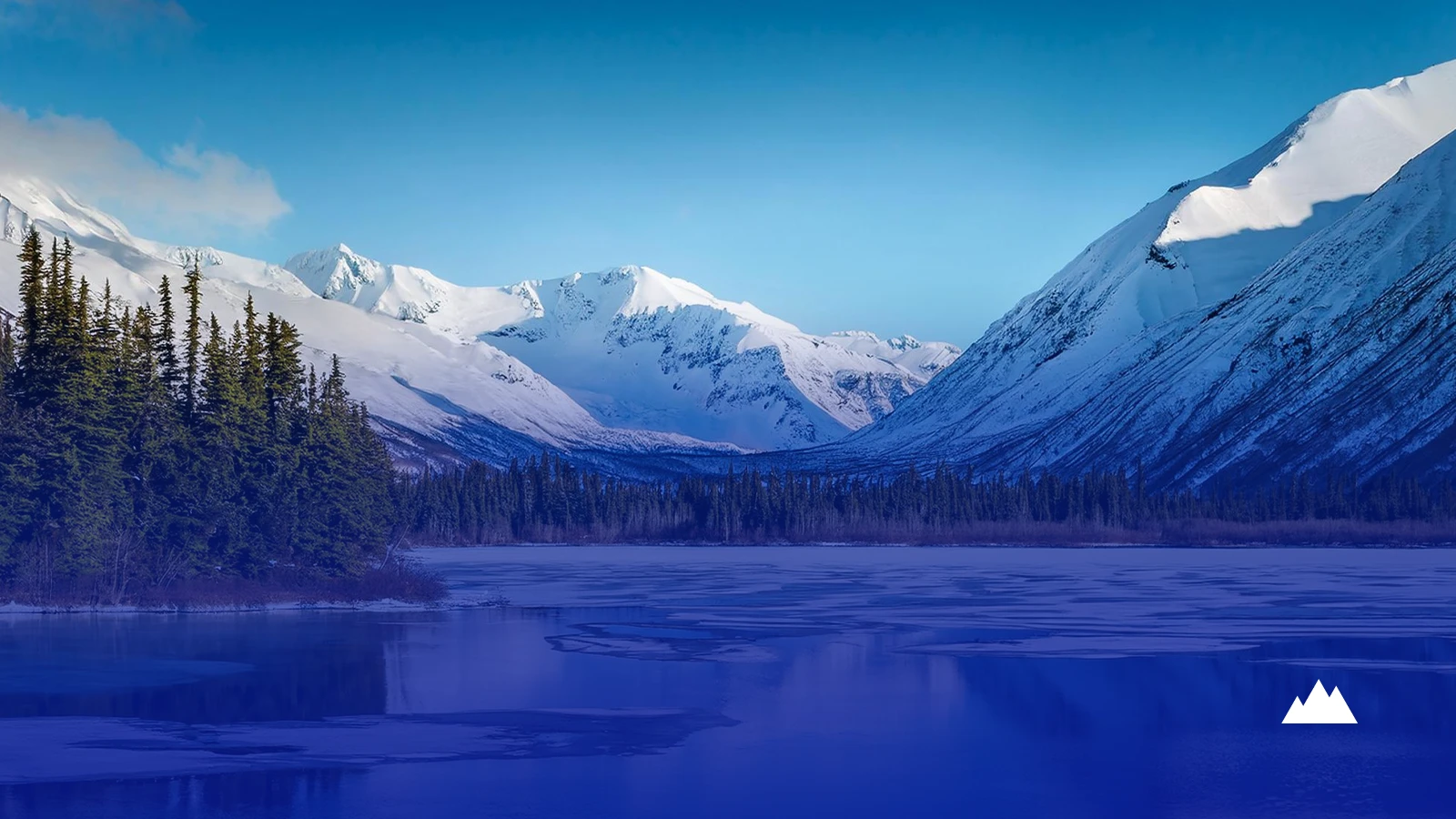
Alaska and the Himalaya have more in common than the map suggests. Both are vast, thinly populated, resource-rich and far from the markets they supply. Both hold large indigenous and customary land claims. Both are warming faster than the lowlands below them, on ground that was assumed to be permanent. Both pay a premium for distance on almost everything.
The difference is that Alaska wrote its answers into law. Its constitution, adopted in 1956, fixed a sustained-yield rule for renewable resources. Native land claims were settled in 1971 to clear the way for a pipeline. Oil royalties were locked into a sovereign wealth fund in 1976. Voters imposed a cruise passenger tax in 2006.
The Himalaya is still deciding most of these questions project by project. Here are six places where Alaska's answers are worth studying, and what each would change.
1. Build a Himalayan sovereign wealth fund
Alaska. The Alaska Permanent Fund is a sovereign wealth fund, and a member of the International Forum of Sovereign Wealth Funds, even though Alaska is a state rather than a country. In 1976 Alaskans amended their constitution to require that at least 25% of mineral royalties and related receipts go into the fund, whose principal can only be invested, never spent. The first deposit, in 1977, was $734,000. By 31 August 2026 the fund stood at about $89 billion and supplied more than half of the state's unrestricted general revenue. The lock protects the principal but not the payout: in 2026 the statutory dividend formula pointed to over $3,800 per resident, and the legislature approved $1,200.
The Himalaya. Bhutan already has a sovereign wealth fund: Druk Holding and Investments, set up in 2007, which owns the state hydropower company, Druk Green Power. That company provides almost a quarter of government revenue. But DHI is a holding company for state enterprises, not a savings fund fed by a fixed share of royalties with a protected principal. No Indian Himalayan state has either. Himachal Pradesh takes 12% of hydropower output free as royalty, plus 1% for local area development, and spends it through the annual budget. India's District Mineral Foundations, which earmark mining royalties for affected districts, had collected ₹1,22,909 crore by December 2025, with about 46.9% unspent.
The lesson. Alaska shows that a sub-national government can build a sovereign wealth fund on resource royalties, so a hill state does not need to be a country to have one. And Bhutan shows the region already accepts the idea; what it lacks is the Alaskan design. Unspent money is not saved money: Alaska separates a principal that is invested for the long term from earnings that can be spent. Hydropower is renewable, but ICIMOD expects most Himalayan river basins to reach peak glacier runoff around mid-century and decline after. A royalty stream from rivers whose flow will change is exactly the kind of income a sovereign wealth fund exists to convert into a permanent financial asset.
What it reprices: the fiscal durability of hill states, and how lenders read their hydropower income.
2. Turn land claims into equity
Alaska. The Alaska Native Claims Settlement Act of 1971 settled aboriginal land claims by transferring about 44 million acres and $962.5 million to 12 regional and more than 200 village corporations, owned by Alaska Native shareholders. It was passed partly because the oil pipeline could not be built while land ownership was unresolved. The model has real limits: it did not expressly settle hunting and fishing rights, and the corporations are businesses rather than tribal governments.
The Himalaya. Customary and community control of land is widespread but mostly takes the form of use rights. Nepal's community forest user groups, by recent counts around 22,000, manage roughly 2.2 million hectares, about a quarter of the country's forest cover. India's Forest Rights Act and Uttarakhand's van panchayats give communities rights to use and manage forests, but not an ownership stake they can invest, borrow against or contract with.
The lesson. Alaska turned a contested claim into a legal entity that can sign agreements, hold assets and receive income. That is what made large projects possible on contested land. A Himalayan community that owns an equity-like stake in a project has a reason to see it built. A community with only a grievance has a reason to delay it.
What it reprices: consent risk and delay on hydropower, roads and transmission lines, which is one of the largest unpriced costs in Himalayan infrastructure.
3. Cap the harvest by science, then allocate it
Alaska. Alaska's constitution requires fish, forests, wildlife, grasslands and other renewable resources to be managed on the sustained-yield principle. The state separates the two jobs: the Department of Fish and Game sets how much can be harvested; the Board of Fisheries decides who gets it. Salmon fisheries have been under a limited-entry permit system since 1973. The halibut and sablefish fisheries moved to individual fishing quotas in 1995 to end a destructive race to catch fish first, and now form the largest catch-share programme in the United States.
The Himalaya. The region's pressure points are not fisheries but high passes, pilgrimage routes, grazing land and spring-fed water. The Indian Himalayan region alone receives around 400 million tourist visits a year. Bhutan controls volume through price, with a per-night fee. Most other Himalayan destinations have neither a scientific limit nor a fair way of allocating access.
The lesson. The Alaskan model does not start with a fee. It starts with a number: how much can this place carry? Allocation comes second, and can then be by permit, quota, auction or price. Separating the two makes the cap defensible and the allocation negotiable.
What it reprices: the long-term value of destinations currently priced as if their capacity were unlimited.
4. Put a price on thawing ground
Alaska. A 2025 study in Communications Earth & Environment estimated permafrost thaw will cost Alaska's roads and buildings $37 billion to $51 billion through mid-century, roughly double earlier estimates, because researchers mapped the infrastructure more completely. One Alaska Native health consortium counts 114 communities facing damage from erosion, flooding or permafrost thaw. Newtok has spent decades and about $160 million moving to a new site.
The Himalaya. Around 1.5 million square kilometres of permafrost, roughly 7% of the world's total, lie in the Hindu Kush Himalaya. Studies estimate the western Himalaya lost 8,340 square kilometres of permafrost between the early 2000s and 2018–2020. ICIMOD has called for permafrost monitoring to be part of disaster risk assessment for large high-altitude projects, noting that quantitative projections are scarce.
The lesson. Alaska has a cost estimate; the Himalaya does not. The science on Himalayan permafrost exists, but no one has yet mapped it against the roads, tunnels, hydropower and settlements built on or near it and put a figure on the result. That gap is where an economic assessment belongs.
What it reprices: the lifetime cost and insurability of high-altitude infrastructure.
5. Send visitor money to the places that host visitors
Alaska. A citizen ballot initiative in 2006 created a tax on large cruise ships, now $34.50 per passenger per voyage. Five dollars per passenger goes to each of the first seven Alaskan ports a ship calls at, and the money must be spent on port and visitor infrastructure. In 2026 the state also distributed $37.5 million of unused cruise tax funds to port communities.
The Himalaya. Bhutan's Sustainable Development Fee, currently $100 a night for most international visitors and ₹1,200 for Indian visitors, is collected by the national exchequer. In most Himalayan destinations, the towns absorbing the traffic, waste and water demand of pilgrims and tourists receive no direct share of what visitors pay.
The lesson. The Alaskan design is not mainly about the size of the levy. It is about the earmark: a fixed amount per visitor, paid to the place that bore the load, restricted to spending that serves visitors. It links tourism volume to the money for handling it.
What it reprices: the carrying capacity and service quality of pilgrimage and tourist towns, and the political acceptability of visitor fees.
6. Measure the cost of distance
Alaska. Since 1972, Alaska's Bypass Mail programme has let stores and schools in off-road communities ship pallets of groceries and supplies by air at postal rates, with the Postal Service covering the difference. It cost about $133 million in 2022. Its cost is argued over in Washington almost every year, but the argument is about a known number.
The Himalaya. High-altitude settlements depend on roads that close for months, on air links, or both. Everything from cement to cooking gas costs more the higher and further up the valley it goes. HEF is not aware of any published index that measures this premium systematically across the Himalaya.
The lesson. Before a government can decide who should pay the cost of distance, it has to know what that cost is. Alaska's subsidy debate works because the figure is public.
What it reprices: the real cost of living and operating at altitude, which affects wages, project budgets, tourism pricing and the case for keeping people in border and high-mountain areas.
The common thread
Alaska's choices were not all correct, and several are still contested. But each was made early, written into law, and attached to a number. That combination is what turned a remote, climate-exposed resource frontier into an economy that investors, lenders and residents can plan around.
The Himalaya has most of the same conditions and few of the same instruments. Each of the six gaps above is a policy question. Each is also a measurement question that no institution in the region is yet answering.
Sources
Permanent Fund
International Forum of Sovereign Wealth Funds, Members: Alaska Permanent Fund. https://www.ifswf.org/members/usa (opens in a new tab)
'Size does not matter': Bhutan's tiny sovereign wealth fund banks on green energy and Bitcoin, Fortune, May 2025. https://fortune.com/asia/2025/05/11/bhutan-sovereign-wealth-fund-bitcoin-green-energy (opens in a new tab)
ICRA, Druk Green Power Corporation Limited: Ratings reaffirmed, June 2025 (DGPC ownership by DHI). https://www.icra.in/Rating/GetRationalReportFilePdf?Id=135785 (opens in a new tab)
Alaska Permanent Fund Corporation, Frequently Asked Questions and History. https://apfc.org/frequently-asked-questions/ (opens in a new tab) ; https://apfc.org/about/history/ (opens in a new tab)
Alaskans' Permanent Fund dividend now set at $1,200 for 2026, Alaska Story. https://thealaskastory.com/alaskans-permanent-fund-dividend-now-set-at-1200-for-2026/ (opens in a new tab)
Himachal Pradesh to monetise free hydropower, The Tribune. https://www.tribuneindia.com/news/himachal/himachal-pradesh-to-monetise-free-hydropower/ (opens in a new tab)
Securitisation of Hydropower Receivables: A First for the Kingdom of Bhutan, Energetica India, June 2026. https://www.energetica-india.net/articles/securitisation-of-hydropower-receivables--a-first-for-the-kingdom-of-bhutan (opens in a new tab)
District Mineral Foundations (DMFs) in India, 2026, IMPRI. https://www.impriindia.com/insights/policy-update/district-mineral-foundations-in-india/ (opens in a new tab)
Himalayas face rising risks as glaciers melt faster (Systemiq report with ICIMOD technical support). https://tob.news/himalayas-face-rising-risks-as-glaciers-melt-faster/ (opens in a new tab)
Land claims
Congressional Research Service, Alaska Native Lands and the Alaska Native Claims Settlement Act. https://www.congress.gov/crs_external_products/R/HTML/R46997.html (opens in a new tab)
ANCSA Regional Association, About ANCSA. https://ancsaregional.com/about-ancsa/ (opens in a new tab)
Ouzinkie Native Corporation, ANCSA history. https://www.ouzinkie.com/ancsa (opens in a new tab)
Environment for Development, Key Lessons from Nepal Visit (community forestry figures). https://www.efdinitiative.org/sites/default/files/Key%20Lessons%20from%20Nepal%20Visit_Ug%20Team.pdf (opens in a new tab)
Sustained yield and quotas
Constitution of the State of Alaska, Article VIII. https://ltgov.alaska.gov/information/alaskas-constitution/ (opens in a new tab)
North Pacific Fishery Management Council, Halibut/Sablefish IFQ Program. https://www.npfmc.org/fisheries-issues/catch-shares-allocations/ifq/ (opens in a new tab)
Alaska salmon fishery (limited entry and management structure). https://en.wikipedia.org/wiki/Alaska_salmon_fishery (opens in a new tab)
The Himalayas are melting faster – and India's economy is 'at risk' (tourist visit figure). https://capitalfm.africa/the-himalayas-are-melting-faster-and-indias-economy-is-at-risk/ (opens in a new tab)
Permafrost
Manos et al., Permafrost thaw-related infrastructure damage costs in Alaska are projected to double under medium and high emission scenarios, Communications Earth & Environment (2025). https://www.nature.com/articles/s43247-025-02191-7 (opens in a new tab)
Cost estimates rising for permafrost-related damage to Alaska roads and buildings, Alaska Beacon. https://alaskabeacon.com/2025/05/09/cost-estimates-rising-for-permafrost-related-damage-to-alaska-roads-and-buildings/ (opens in a new tab)
Climate change destroyed an Alaska village, CBC News. https://www.cbc.ca/news/canada/north/newtok-alaska-destroyed-climate-change-relocation-1.7337088 (opens in a new tab)
ICIMOD, Developing a strategy to monitor permafrost changes in the Hindu Kush Himalaya. https://www.icimod.org/proceedings/developing-a-strategy-to-monitor-permafrost-changes-in-the-hindu-kush-himalaya/ (opens in a new tab)
Hindu Kush Himalayas are changing. Ramp up adaptation, urges ICIMOD, Down To Earth. https://www.downtoearth.org.in/news/climate-change/hindu-kush-himalayas-are-changing-ramp-up-adaptation-urges-icimod-90124 (opens in a new tab)
Visitor levies
Alaska Department of Revenue, Shared tax programs (Commercial Passenger Vessel Tax). https://www.akml.org/wp-content/uploads/2023/10/Shared-Tax-Trends-Presentation-to-AML-Tax-Conference-9.28.23_spanos.pdf (opens in a new tab)
Alaska Legislature, HB 252 Fiscal Note (tax history). https://www.akleg.gov/basis/get_documents.asp?session=29&docid=40344 (opens in a new tab)
Alaska Sends $37.5M in Unused Cruise Tax Funds to Ports, Cruise News. https://www.cruisenews.io/alaska-sends-37-5m-in-unused-cruise-tax-funds-to-ports/ (opens in a new tab)
Tourism Council of Bhutan, Sustainable Development Fee. https://www.visitbhutan.com/page.php?id=68 (opens in a new tab)
Logistics
Possible Postal Service changes present challenge to Alaska Bypass Mail, Alaska Beacon, March 2025. https://alaskabeacon.com/2025/03/19/possible-postal-service-changes-present-challenge-to-alaska-bypass-mail/ (opens in a new tab)
Postmaster general considers bringing budget axe down on Alaska's Bypass Mail, Alaska Public Media. https://alaskapublic.org/2020/08/21/postmaster-general-considers-bringing-budget-axe-down-on-alaskas-bypass-mail/ (opens in a new tab)